
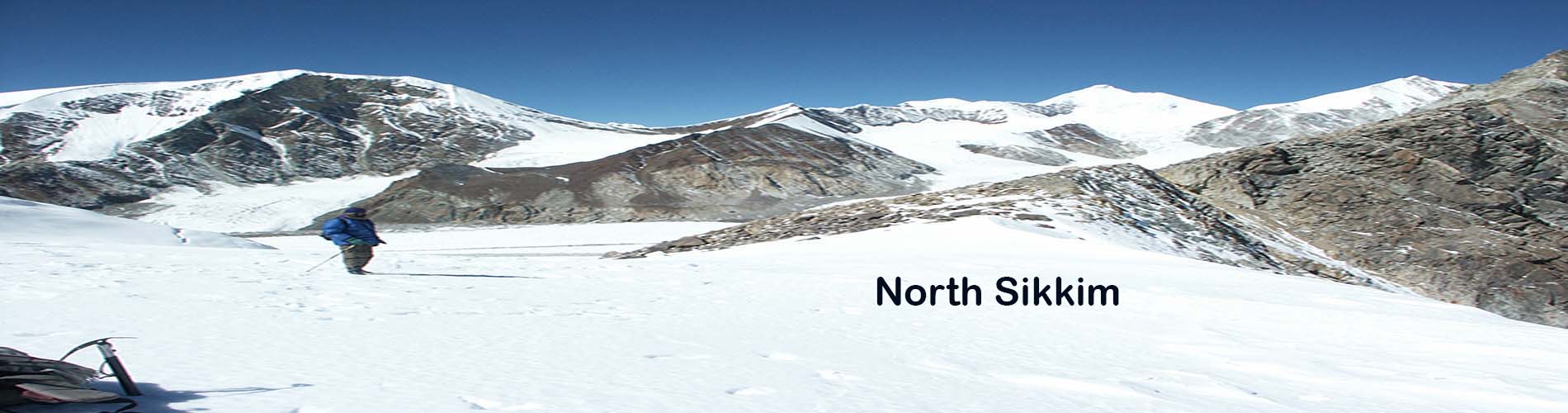
North Sikkim
North Sikkim, actually the area starts just 20 Kilometer ahead of the state capital Gangtok, from the historical place KABI LONG TOOK where the historic treaty been signed ritually somewhere at the 13th century, in between Bhutia chief Key-Bum-Sar and the Lepcha chief Te-Kung-Tek. The spot of this treaty ceremony was marked by a memorial pillar of stone, now lost in a dense forest.
North Sikkim is the largest and remote District of Sikkim State of India, on the way to Lachung or Lachen the Small hill town Mangan is a headquarter of North District. Recently North Sikkim came in limelight for noncomparable and spectacular almost virgin topography along with its own alpine flora and fauna, glaciers, snowcapped mountains, hot springs, virgin Lakes and many more attractions.
All tourists Domestic and from a foreign country are need the special permit from Sikkim Tourism Department at Gangtok to visit North Sikkim beyond Mangan. Only a few places in north Sikkim are allowed for tourists and the tour only possible as organized through a local tour agency or by Sikkim Govt. Tourism. Entire North Sikkim comes under a restricted area and under controlled by Indian Army, any of the tourists cannot enter North Sikkim without a legal permit.
In the period of North Sikkim tour most of the accommodation available in medium standard category resorts, with basic amenities and food arrangement. Luxury hotels and resorts in North Sikkim are limited. And guests may not get the same level of service in North-Sikkim as they get in other tourist places of the region.
Best Places to Visit in and around North Sikkim
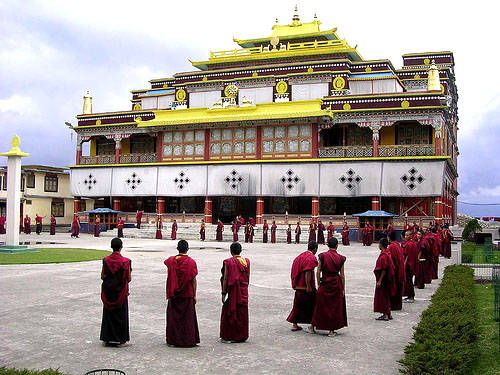
Phodong Monastery
The meaning of Phodong is “the Royal Chapel”. At a distance of 38 Km. on the way to Lachung, Phodong is a small township. The phodong monastery which belongs to the Kargyupa sect of Tibetan Buddhism is located at 1 Km. a steep climbing road from Gangtok Lachung highway. The monastery founded in the first quarter of 18th century, and one of the six major monasteries in Sikkim.
Labrang Monastery
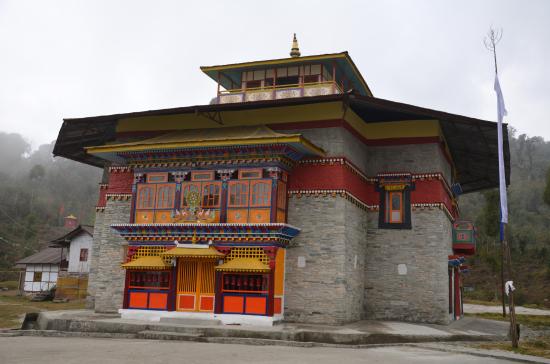
Labrang means the “dwelling place of Lamas” Another one km uphill from Phodong Monastery ahead of 1 Km. more by the same uphill steep road, the Labrang Monastery which belongs to the Nyingmapa sect of Tibetan Buddhism.
La – Chung
Lachung ( Altitude -2,684 m / 8,610 ft.) is a beautiful Bhutia Village, perhaps somewhere after 15th century they migrated from Tibet through Bhutan and settled here. The major inhabitants of Lachung Known as“Lachung pa” In Lachung they have their own old traditional legal system Dzumsa (the public meeting place)to settle disputes. The head person of Zuma known as `Pipon’
Lachung was known as a tourist destination with the popularity of Yumthang Valley, and Lachung itself-having own identity for its unforgettable picturesque view of River, Valley, Rocks, waterfalls, and surrounding of Mountains at a glance in 100% natural and pollution free environment. It is also the place of night stay for the visitors of famous Yumthang valley, which is just 24 km away from Lachung. Most of the accommodations are provided in the houses are made by traditional architecture and beautifully painted with the traditional lucky signs are intimate and teaching of Buddha’s .those paintings proves skill ness and sense of color mixing of Tibetan traditional artists called “Larisa” which is perfectly matched with the village background.
In hospitality, you can feel the touch of local tradition and culture. One can enjoy the local millet beer known as Tongba which is served in a unique beer mug made by one hollow piece of bamboo and for sipping beer bamboo pipe used like a straw. It is very prestigious Welcome drink in Bhutia tradition.
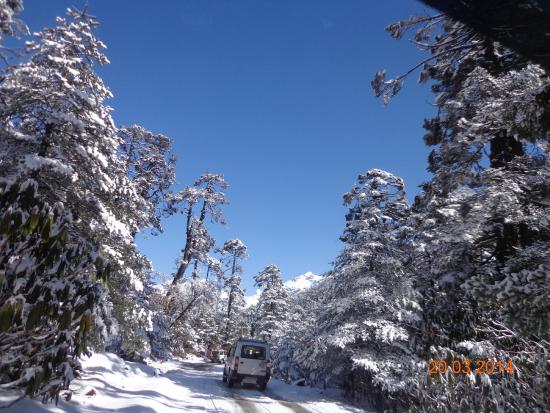
In winter most of the people’s are temporarily come down at lesser altitude area with their family member’s because temperature falls down below the frizzing point and the area goes in a cover of snow.
Yum Thang: (valley of flowers)
The Paradise for nature lovers Yumthang situated in North Sikkim at an altitude of 3782 m (11,800 ft). and at a distance of 149 km from Gangtok, Lachung is the Entrance point of Bumthang Valley. Yumthang is world famous for its Singba Rhododendrons sanctuary, which is having almost 24 variety’s species of Rhododendron some of them are the only species in the world. Rhododendrons basically bloom in abundance during springtime in the month of April & May. And in winter the valley goes in covered by thick layer of ice; rivers are seen as freeze shot of the movie, suddenly stuck up with their motion. In winter it is not possible to visit this area. At the time of visit Yumthang valley, one can feel it is like traveling 2 of century’s back in time, nature is almost virgin and untouched by the artificial modern method of civilization. Also one can see free movement of Yak’s nearby the valley.
At the adjoining area of the sanctuary, there is a sulfur hot spring, in local dialect “Tsha-chu” which is locally popular for its curative properties minerals & medicinal power. It is situated in between Yumthang and Lachung on the bank of Lachung River.

Natural History Museum, Darjeeling
A great place to be at, for all those who have a great interest in knowing about the history.The museum has a collection of over 4300 specimens. Established in 1903, this natural history museum packs in its folds a rich collection of fauna found in the Himalayas and in Bengal. Among the attractions are included the estuarine crocodiles. This unique museum also has a good collection of butterflies. The mineral forms of various stones are displayed in a very attractive manner in the museum.
Darjeeling Zoological Gardens
The zoo is situated two km from the main town. This zoological garden of Darjeeling houses some of the rare species of animals and birds. This is the only zoo in India having the Siberian Tigers. Apart from these, the rare Red Panda is also there. The Snow Leopards, Great Grey Birds, Snow Yaks are some the animals which are attracting tourist in great numbers.
Happy Valley Estate, Darjeeling
We all start our day with tea but we seldom know how the tea is processed. Here one can watch the tea from the gardens being processed. One can spend a few hours here. Entry is only allowed to persons who have permission from any officer of the estate.