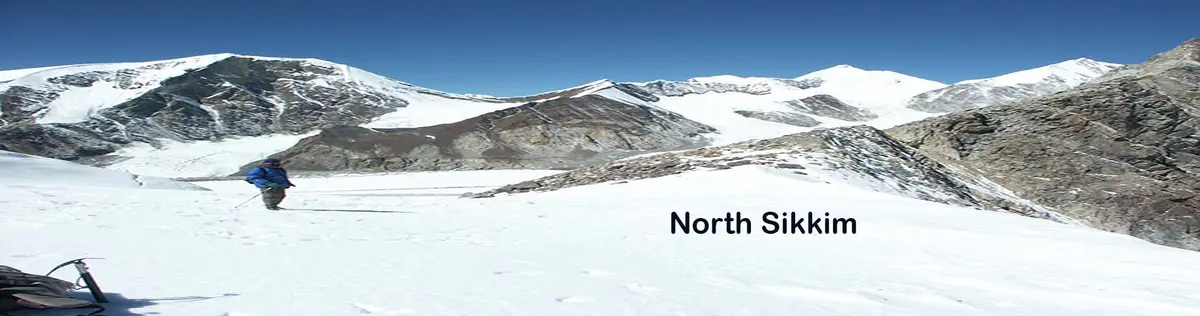
North Sikkim is the largest and most remote district of Sikkim. Its boundary starts only about 20 km from Gangtok, near Kabi Lungchok, where a historic blood-brotherhood treaty between the Bhutia and Lepcha chiefs was sealed centuries ago. From there the road follows the Teesta river past Mangan, the district headquarters, to Chungthang, where it splits: one branch climbs to Lachung and Yumthang, the other to Lachen and Gurudongmar Lake.
The scenery is unlike anywhere else in India – alpine meadows, glaciers, hot springs, high lakes and snow peaks, with very little development. That is also why North Sikkim needs more planning than the rest of the state: you need a permit, a local registered vehicle and realistic expectations about roads and hotels.
Permits and road conditions
All visitors, Indian and foreign, need a Protected Area Permit to go beyond Mangan. Permits are issued through registered Sikkim tour operators against your itinerary, vehicle and ID documents – you cannot simply drive up on your own, and outside vehicles are not allowed. Foreign nationals can visit Lachung, Yumthang and Lachen but not Gurudongmar Lake or Zero Point. Full details are in our Sikkim permit guide.
Places to visit on the way
Phodong and Labrang monasteries
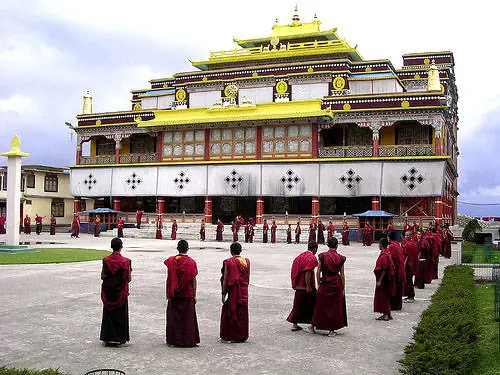
About 38 km from Gangtok, just off the highway, Phodong Monastery – "the royal chapel" – belongs to the Kagyu sect and dates from the early 18th century. It is one of the six major monasteries of Sikkim.
A short, steep climb further up is Labrang Monastery, "the dwelling place of lamas", of the Nyingma sect. Both make a good stretch break on the long drive north.
Waterfalls and the Teesta valley
Seven Sisters Falls, Naga Falls and many smaller cascades line the road, especially after the monsoon. Your driver will stop at the main viewpoints.
Lachung and Yumthang Valley
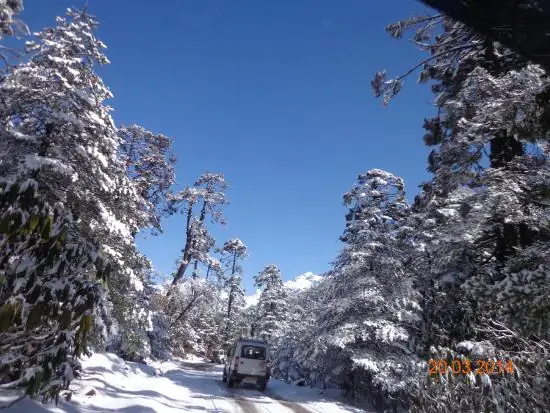
Lachung (about 2,600 m) is a Bhutia village of painted wooden houses, apple orchards and waterfalls. Lachung has its own traditional village council, the Dzumsa, headed by the Pipon, which still settles local matters. In winter many families move down to warmer places as the village is covered in snow.
Lachung is the night halt for Yumthang Valley (about 3,600 m), 24 km away – the "valley of flowers", home to the Shingba Rhododendron Sanctuary with more than 20 species of rhododendron. They bloom from April to May. Near Yumthang there is a hot sulphur spring (tsha-chu) on the bank of the Lachung river.
Beyond Yumthang, the road climbs to Zero Point (Yumesamdong) at around 4,600 m, where there is snow for much of the year. Indian visitors only. Read more in our Gurudongmar and Yumthang guide.
Lachen, Chopta Valley and Gurudongmar Lake
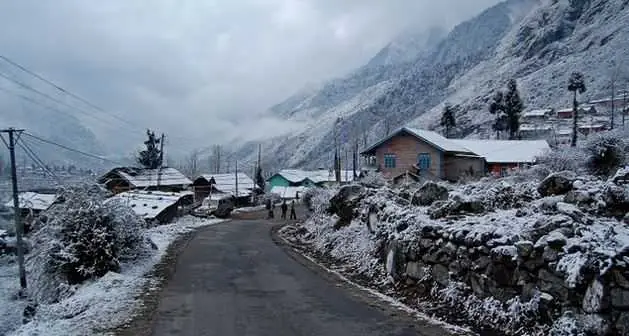
Lachen (about 2,700 m) is another Bhutia village with its own Dzumsa. It is the overnight stop to rest and get used to the altitude before going higher. Lachen Monastery, built in the early 19th century above the village, gives fine views over the valley.
Chopta Valley (around 4,000 m) is a wide high meadow that turns into a carpet of flowers in spring and freezes solid in winter.
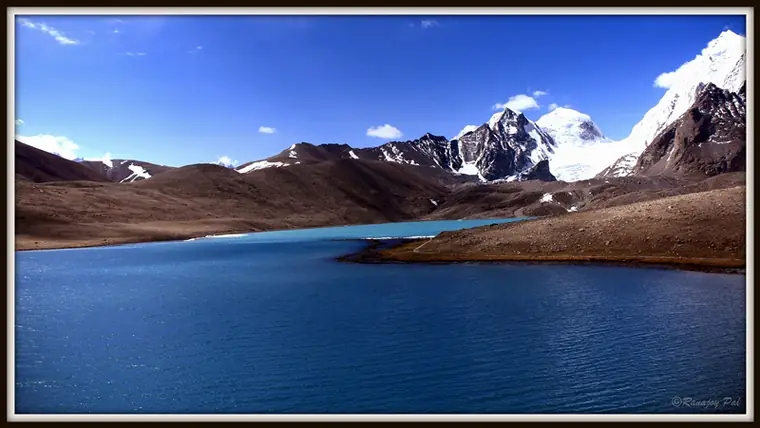
Gurudongmar Lake, at about 5,200 m, is one of the highest lakes in the world and sacred to Buddhists, Sikhs and Hindus. It is believed that Guru Padmasambhava blessed the lake, which is why part of it is said never to freeze. On one side is the brown Tibetan plateau, on the other glaciers coming down to the water.
The drive leaves Lachen before dawn and returns by midday, as winds pick up in the afternoon. It is open to Indian citizens only.
Sample North Sikkim itinerary
| Day | Route | Night stay |
|---|---|---|
| 1 | Gangtok to Lachung via Mangan and Chungthang (about 6–8 hours) | Lachung |
| 2 | Yumthang Valley and Zero Point, back to Lachung; drive to Lachen if roads allow | Lachung or Lachen |
| 3 | Early start for Gurudongmar Lake, back to Lachen and down to Gangtok | Gangtok |
We adjust this to road conditions and timing rules on the day. A four-day version with two nights in Lachen is easier on older travellers. See our full Sikkim tour itineraries.
Where to stay in North Sikkim
Most accommodation in Lachung and Lachen is in medium-standard hotels and homestays with basic facilities. Luxury properties are very few, and service is simpler than in Gangtok. Electricity and hot water can be limited in bad weather. Food in most places is basic, and pure vegetarian or Jain food is hard to find – which is why our own Tip Top hotels in both Lachen and Lachung cook Gujarati and Jain meals for our guests.
Local culture
The Lachungpas and Lachenpas are Bhutia communities whose ancestors came from Tibet several centuries ago. Their villages are run by the traditional Dzumsa council. Houses are built in wood and stone and painted with Buddhist symbols. In winter many families move down to lower villages, returning in spring for farming and the tourist season. Visitors may be offered butter tea or the local millet drink (tongba) as a sign of welcome.
What it costs
North Sikkim tours are usually sold as packages that include the permit, a Sikkim-registered vehicle with driver, rooms and meals. The cost depends on the season, group size, vehicle type and number of nights. Contact us for current rates – we will also tell you which roads are open on your dates.
Health and packing tips
- Altitude can cause headaches and breathlessness. Walk slowly, drink plenty of water and avoid alcohol. Anyone with heart or lung problems should check with a doctor before going to Gurudongmar or Zero Point.
- Pack warm layers, gloves, a woollen cap, sunglasses, sunscreen and good shoes – it is cold even in May.
- There is little or no mobile signal beyond Chungthang. Carry cash and printed copies of your ID.
- Hotels in North Sikkim are simple, and vegetarian food is limited – which is why our own hotels there serve Gujarati and Jain meals.
Frequently asked questions
Do I need a permit for North Sikkim?
Yes. Every visitor needs a Protected Area Permit, issued through a registered Sikkim tour operator with a local vehicle. We arrange it as part of your package.
Can foreigners visit Gurudongmar Lake?
No. Foreign nationals can visit Lachung, Yumthang and Lachen with a permit, but Gurudongmar Lake and Zero Point are open to Indian citizens only.
Is North Sikkim open now?
Lachung, Yumthang and Lachen have reopened after the 2023 flood damage, but closures and timing restrictions still happen. Contact us for the status on your dates.
When do rhododendrons bloom in Yumthang?
Mainly April and May. From December to February the valley is usually under snow.
Read next
Updated October 2026 by the Tip Top Group team.